Free, helpful information about Card Guides and related Can i Take Money Out Of a Credit Card topics.
Get clear and easy-to-understand details about Can i Take Money Out Of a Credit Card topics and resources.
Answer a few optional questions to receive offers or information related to Card Guides. The survey is optional and not required to access your free guide.
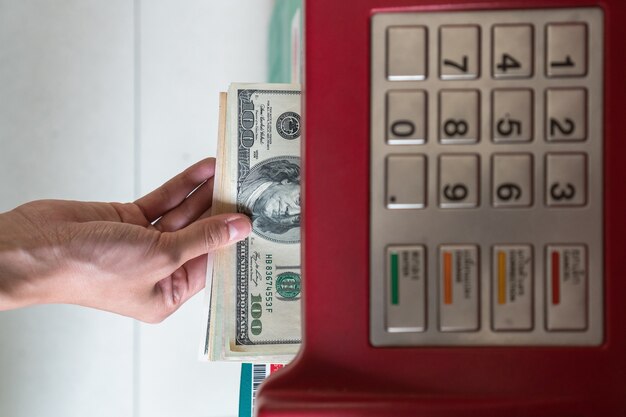
Yes, you can take money directly out of a credit card—but it's not the same as using the card to buy something. The process is called a cash advance, and it comes with costs and trade-offs that are important to understand before you use it. 💳
A cash advance lets you borrow cash against your credit card's available credit. Instead of making a purchase, you're withdrawing actual money—either at an ATM, through your bank, or from certain retailers. The amount you withdraw counts as borrowed money on your credit card account, just like any other charge.
The key distinction: when you use a credit card to buy something, you're charged interest only if you carry a balance. With a cash advance, interest starts accruing immediately, from day one—there's typically no grace period like there is for regular purchases.
The mechanics are straightforward:
That's it operationally. What happens financially is more complex.
Cash advances come with costs that typically exceed what you'd pay for regular credit card purchases:
Cash advance fees — Most card issuers charge a flat fee (often $5–$10) or a percentage of the amount withdrawn (commonly 2–5% of the cash advance), whichever is greater. A $500 cash advance with a 3% fee costs $15 immediately.
Interest rates — Cash advances usually carry a higher APR than regular purchases. While your card's standard purchase APR might be one rate, cash advances often have their own, steeper rate. Interest accrues daily from the moment you withdraw the cash.
No grace period — Unlike purchases, which typically have a 21–25 day grace period before interest kicks in, cash advance interest starts immediately.
Because of these stacked costs, even a small cash advance becomes expensive quickly if you don't pay it back fast.
Cash advances are rarely the cheapest way to get money, but they're sometimes the only way in specific situations:
Even in these cases, the question isn't really "Can I?" but "What will this cost me?"—and whether that cost is worth the emergency you're facing.
| Option | Speed | Cost | Best For |
|---|---|---|---|
| Cash advance | Minutes | High (fees + immediate interest) | True emergencies only |
| ATM withdrawal (debit) | Minutes | Bank fees only | You have funds available now |
| Personal loan | Days to weeks | Lower interest, fixed terms | Planned borrowing needs |
| Credit card purchase + ATM | Hours to days | No cash advance fee, grace period on interest | Time-flexible needs |
| Credit line or HELOC | Days | Often lower rates than credit cards | Larger amounts, planned expenses |
A cash advance shows up on your credit report like any other credit activity. It affects your credit utilization ratio—the percentage of your available credit you're using. Running up your utilization, even temporarily, can lower your credit score. The impact depends on how much of your credit limit you use and how long you carry the balance.
If you do take a cash advance:
You can take money out of a credit card, but the fees and immediate interest make it one of the most expensive ways to borrow cash. For most situations, alternatives like a personal loan, a line of credit, or simply using an ATM with your debit card are cheaper. Reserve cash advances for true emergencies where the cost of waiting outweighs the cost of the advance itself.
Your specific decision depends on how urgent your need is, what other borrowing options are available to you, and what you can realistically repay within the next few weeks.